The Road to Homebase: Why I’m Running Boston


In August 2016, I left for Navy boot camp. Half a year later, I was one of three Hospital Corpsmen aboard USS O’Kane, responsible for the health of more than 300 sailors. When something went wrong on that ship, people looked to me. When I couldn’t fix it, I carried it. For years, I blamed myself for things I never had to carry.
I didn’t call it PTSD or moral injury at the time. I called it not doing enough. After my medical discharge, I brought that home with me, and it followed me into every part of my life.
This is the story of how I started to put it down, and why I’m running 26.2 miles so the next veteran can too.
Before the Navy

Loss came early for me. My dad died of cancer when I was nine. By the time I was twelve, cancer had taken my grandmother too. She was my best friend, a former police commissioner in East Haven, and the most fiercely patriotic person I’ve ever known. Then, when I was in high school, my mom was diagnosed. She fought it, and she won. But by then I had spent a lot of my childhood around hospital beds.
As the oldest, I learned to be the steady one. With a younger brother at home, I was still a kid but expected to act like an adult. I got good at holding it together and at being the person no one had to worry about. I didn’t have words for it then, but I was learning that being strong meant keeping things to yourself.
What I noticed most in those years were the people around those beds: the nurses and caregivers who came in on the worst days and stayed calm. They explained things. They knew when to talk and when to just be there. They couldn’t change what was happening to my family, but they made it bearable. I wanted to be that person for someone else.
My grandmother showed me the other half of it. She never softened anything for me. When my dad was sick, she was the one who told me. We were sitting at her kitchen table when my mom called, and after she hung up she looked right at me and said, “Kid, he’s going to die soon.” No emotion. Just the truth. Life had made her hard, and I think she wanted me to be ready for it.
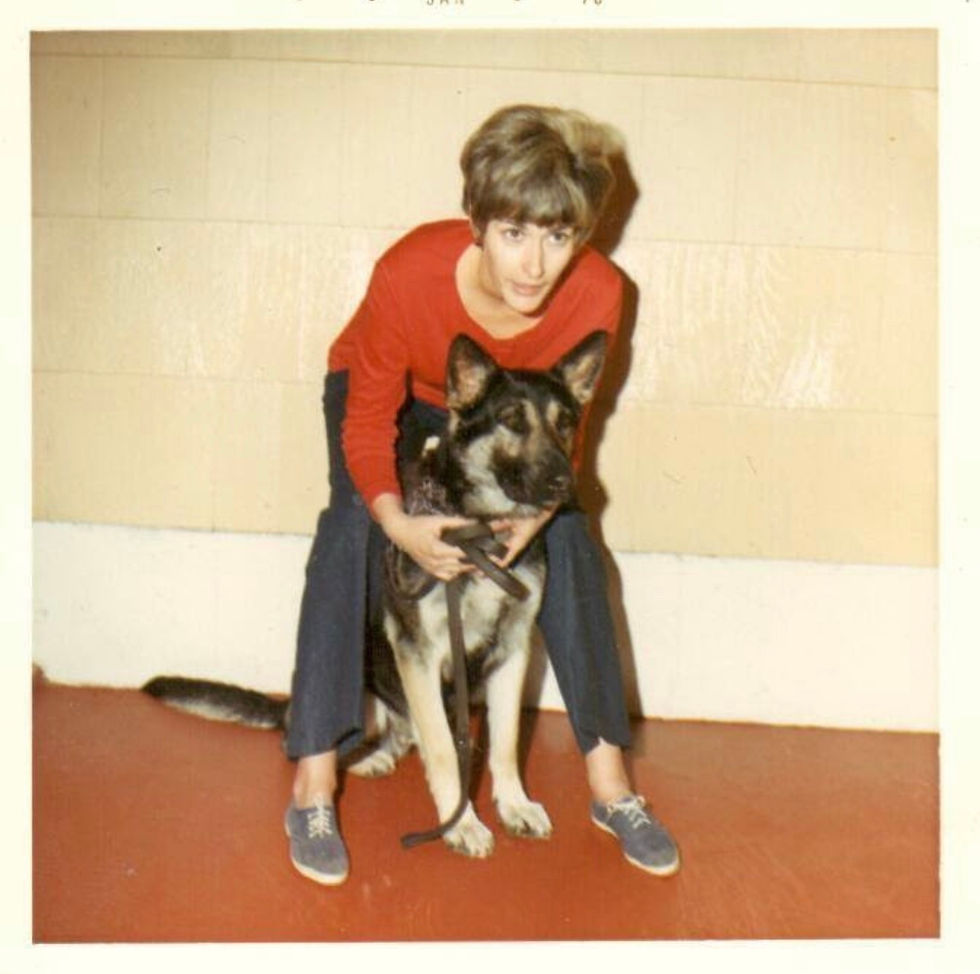
After he died, she took me to the gun range. She and Pop owned the Mobil station in Guilford and were friends with all the DOT guys. One of them, a truck driver named Pat, showed up with a small .22, and together they taught me how to shoot. I was damn good. Looking back, it was never about the gun. She knew how much pressure I was under, and she wanted me to feel strong and to know she trusted me with something serious. She always treated me like an equal.
Watching her serve East Haven, I understood that service wasn’t a job title. It was a way of showing up for people. I wanted a life built on that too.
Becoming Doc

When I enlisted, I chose to become a Hospital Corpsman, the Navy’s frontline medical caregiver. It felt like the clearest way to do both things I cared about: serve my country, and take care of people when they need it most. My grandmother wasn’t there to see it, but when I left, my mom prayed to her and my dad: “I got her this far. Now you have to take her the rest of the way.”
On the O’Kane, the two corpsmen I served with became my brothers. They trained me hard, and they taught me that watching the crew’s mental health mattered as much as the medicine. I kept a patch on my med bag that read “NO WEAK SHIT!” It became my creed. When sailors were struggling, I told them it didn’t mean bottling things up. It meant choosing the hard path, and sometimes the hard path is walking into medical and asking for help. Reaching out isn’t weakness. It’s strength.
I believed that for every sailor on that ship. I just never said it to myself.
That instinct to be the steady one is what made me a good corpsman. People could count on me to stay calm and get the job done. It’s also part of why, years later, asking for help was so hard. I had spent most of my life on one side of the hospital bed. I didn’t know how to be the person in it.
Finding Home Base

I wouldn’t be here today without Lia and Bryan Donahue.
They came into my life when I was struggling to find my purpose after leaving active duty. Bryan is a Marine veteran, and he and Lia have spent years championing the health and well-being of veterans, service members, and their families through Fisher House, Home Base, Vets Rock, APK Charities, and more causes than I can count.

They helped me make the transition into civilian life, became a steady sounding board through my health challenges, and pulled me into their family. Lia once joked that she wanted to adopt me. I never let her take it back. They were the ones who first told me about Home Base, a Red Sox Foundation and Massachusetts General Hospital program that treats the invisible wounds of war for veterans, service members and their families, at no cost to them.
I first reached out to Home Base in 2024. I filled out the online form, and the next day my phone lit up with a Boston number. When I picked up, cold feet already set in, and I convinced myself I didn’t need it.
The man on the other end didn’t push. He thanked me for answering and said they’d be there whenever I was ready. No guilt. No deadline.
That stayed with me. I wasn’t ready then, but the kindness made me remember Home Base differently.
In 2025, I ran the Run to Home Base 5K. Not long after, I told Lia how I reached out the year before, and she urged me to do it again. This time I stayed on the line.

On August 17, 2026, I stood on Constitution Wharf, looking out at the boats with the Boston skyline behind them, trying to make myself walk through the doors of Home Base’s National Center of Excellence. The water had always steadied me. That morning, it was the only thing that did.
I completed Home Base’s Intensive Clinical Program: two weeks of individual Cognitive Processing Therapy and group work alongside other veterans. For the first time, I had words for what I’d been carrying and tools to put some of it down.

On August 28, I stood in the same spot and looked out at the same view. This time, I didn’t have to make myself do anything. The sky even looked a little brighter.
I’m not the only one. I work in neurology and rare disease research, so when I got home, I looked for the data.
A 2024 study in Frontiers in Psychiatry (Harward et al.) looked at 2,561 veterans and service members who went through Home Base’s Intensive Clinical Program between 2015 and 2024, across 261 cohorts like mine. On average, their PTSD symptoms dropped substantially (Cohen’s d = 0.80), and their depression symptoms did too (d = 0.68). By research standards, those are large effects. That kind of change shows up in someone’s life, not just on a chart.
Those numbers aren’t abstract to me. Each one is a veteran or service member who, like me, had to walk through that door. I wasn’t part of that study, but I’m one more data point in the same story, and that story is still being written.
Why Boston
Before I was medically discharged, my last act in uniform was rucking the 26.2-mile Tough Ruck in Concord, Massachusetts. Now I’m going back to 26.2, this time on the Boston course, running with the Mass General Brigham Boston Marathon Team for Home Base at the 131st Boston Marathon on April 19, 2027.

Most mornings you’ll find me training on the roads around Branford and the Connecticut shoreline before work. Every one of those miles is part of the Road to Homebase: the long way back that Home Base helped me find, and the one I want the next veteran to find too.
How You Can Help
My goal is to raise $15,000 for Home Base. Every dollar helps fund the free care veterans and their families receive.
Donate: Visit my GivenGain page and give what you can today.
Follow along: @roadtohomebase on Instagram and Facebook, #RoadToHomebase
Join me: Save the date for my fundraiser dinner and silent auction in Branford on Saturday, February 27, 2027, plus a Super Bowl squares pool for Super Bowl LXI. Details to come.
Thank you for being part of my road home.
— Ro
Comments